Industrial Sewing Machines in Knitted Garments: Types, Uses & Maintenance Guide (2026)
Discover industrial sewing machines used in knitted garments, including types, detailed uses, and maintenance tips. A complete SEO guide for garment manufacturers.


Introduction to Industrial Sewing Machines in Knitted Garments
The garment manufacturing industry relies heavily on industrial sewing machines to produce high-quality apparel at scale. When it comes to knitted garments such as T-shirts, leggings, sportswear, and innerwear, the role of these machines becomes even more critical.
Knitted fabrics are stretchable, flexible, and delicate compared to woven fabrics. This makes it essential to use specialized machines that can maintain elasticity while ensuring durability and professional finishing.
Industrial sewing machines are designed for high-speed operations, precision stitching, and long working hours, making them the backbone of knitwear production.
Why Industrial Sewing Machines Are Essential for Knitwear
Knitted fabrics behave differently due to their looped structure. They stretch easily and can lose shape if not handled properly. Industrial machines help overcome these challenges by offering:
Flexible seam construction
High-speed production
Consistent stitch quality
Reduced fabric damage
Professional finishing
Without the right machinery, knit garments can suffer from seam breakage, puckering, and poor durability.
Types of Industrial Sewing Machines Used in Knitted Garments
Understanding each machine type is essential for efficient production. Below is a detailed overview:
1. Single Needle Lock Stitch Machine
The single needle lock stitch machine is one of the most commonly used machines in garment factories.
Uses:
Label attaching
Minor stitching operations
Reinforcement stitching
Features:
Uses one needle and one bobbin
Produces strong and neat stitches
Limitations:
Not suitable for highly stretchable seams
2. Overlock Sewing Machine (Serger)
The overlock machine is indispensable in knitwear production.
Uses:
Joining side seams of T-shirts
Edge finishing
Preventing fabric fraying
Stitching stretch fabrics
Key Benefits:
Simultaneously cuts, stitches, and finishes fabric edges
Provides strong and flexible seams
Types:
3-thread overlock
4-thread overlock
5-thread overlock
3. Flatlock / Cover Stitch Machine
This machine is essential for finishing knitted garments.
Uses:
Hemming (bottom and sleeves)
Neck rib attachment
Decorative stitching
Advantages:
Maintains fabric elasticity
Provides clean, professional finish
4. Chain Stitch Machine
Chain stitch machines are widely used in knitwear due to their flexibility.
Uses:
Elastic seams
Waistbands
Decorative stitching
Benefits:
High elasticity
Suitable for stretch garments
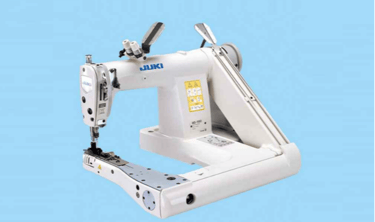
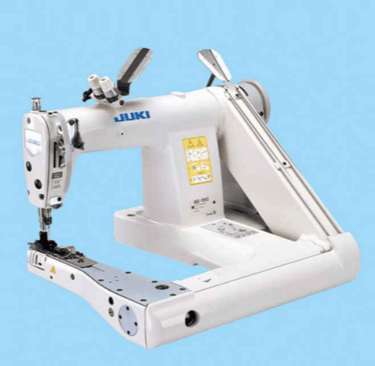
5. Feed-Off-The-Arm Machine
This specialized machine is designed for tubular garments.
Uses:
Sleeve attachment
Side seam stitching
Circular garment construction
6. Flat Seam Machine
Flat seam machines create smooth and comfortable seams.
Uses:
Sportswear
Innerwear
Seamless garments
Advantages:
Flat seams reduce skin irritation
Ideal for performance wear
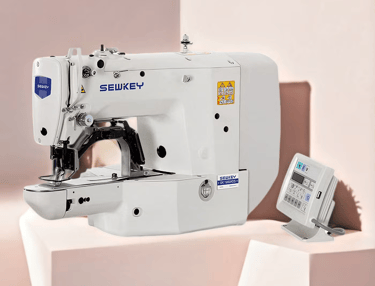
7. Bartack Machine
Bartack machines reinforce stress points in garments.
Uses:
Pocket corners
Belt loops
Stress areas in garments
8. Buttonhole and Button Attaching Machines
These machines are used for functional garment elements.
Uses:
Polo shirts
Knit jackets
Decorative closures
9. Blind Stitch Machine
Blind stitch machines provide invisible stitching.
Uses:
Premium hemming
High-end garment finishing
10. Computerized and Automated Sewing Machines
Modern garment factories are adopting automation for efficiency.
Uses:
Pattern stitching
Automatic thread trimming
Precision operations
Benefits:
Increased productivity
Reduced labor dependency
Consistent quality
Workflow of Knitted Garment Production
A typical knit garment like a T-shirt goes through the following process:
Fabric cutting
Shoulder joining (overlock)
Neck rib attachment (flatlock)
Side seam stitching (overlock)
Hemming (cover stitch)
Reinforcement (bartack)
This workflow ensures strength, flexibility, and high-quality finishing.
Advantages of Industrial Sewing Machines in Knitwear
High-Speed Production
Industrial machines can operate at very high speeds, increasing output significantly.
Consistent Quality
They ensure uniform stitching, reducing defects.
Specialized Functions
Each machine is designed for a specific task, improving efficiency.
Durability
Industrial machines are built for continuous use and long operational life.
Maintenance and Care of Industrial Sewing Machines
Proper maintenance is essential to ensure machine longevity and performance.
Daily Maintenance
Clean lint and dust
Check needle condition
Inspect thread path
Weekly Maintenance
Lubricate moving parts
Check belt tension
Inspect loopers and feed dogs
Monthly Maintenance
Check machine timing
Tighten loose components
Inspect motor performance
Machine-Specific Care
Lock Stitch Machine:
Maintain bobbin area
Adjust thread tension
Overlock Machine:
Clean loopers
Adjust differential feed
Cover Stitch Machine:
Maintain needle alignment
Check thread tension
Chain Stitch Machine:
Monitor looper condition
Ensure smooth thread flow
Needle Maintenance
Replace needles regularly
Use correct needle types for knit fabrics
Damaged needles can lead to fabric damage and poor stitching quality.
Common Problems and Solutions
ProblemCauseSolutionThread breakageIncorrect tensionAdjust tensionSkipped stitchesBent needleReplace needleFabric puckeringImproper settingsAdjust feedUneven stitchingDirty feed dogsClean machine
Safety Practices in Industrial Sewing
Use machine guards
Turn off machines during maintenance
Avoid loose clothing
Ensure proper operator training
Future Trends in Garment Machinery
The garment industry is evolving with advanced technology.
Automation
AI-based machines are increasing efficiency and reducing errors.
Smart Machines
Sensors and digital controls improve accuracy.
Sustainability
Energy-efficient machines reduce environmental impact.
Conclusion
Industrial sewing machines are essential for the production of high-quality knitted garments. Each machine—from overlock to cover stitch—plays a vital role in ensuring durability, flexibility, and professional finishing.
Understanding their uses and proper maintenance can significantly improve productivity and garment quality. For manufacturers and professionals in the garment industry, investing in the right machinery and care practices is key to long-term success.




©COPYRIGHTS LOEV CREATIVES 2026
Loev Creative Ventures Pvt Ltd
Bhubaneswar, Odisha
Garment Manufacturer
Tel.: +91-9937039971
E-mail: contact@loevcreative.com